Energy Transition: Paris unfolds its potential even after ten years
The Paris Climate Agreement celebrates its tenth anniversary. Despite uncertainties surrounding climate goals, the agreement can be considered a success from the perspective of sustainability-focused investors: investment flows have shifted in favor of the energy transition, offering potential for profitable growth, as analyzed by Gerhard Wagner and Daniel Zimmerer.
Authors: Dr Gerhard Wagner and Dr Daniel Zimmerer
Key takeaways on the potential of investments in the energy transition:
- Following the Paris Climate Agreement, investment flows have significantly shifted in favor of the energy transition.
- The energy transition can act as a driver for above-average growth in the following areas: renewable energy, grid expansion, energy efficiency, and electrification.
- For investors, it is crucial not to overlook quality. Therefore, the focus should be on the return on capital of the invested companies.
Only a few days remain until the year ends. But looking at the thermometer, it is already clear: 2025 could go down in history as one of the warmest years, alongside 2023 and 2024, since records began. Just last month, global temperatures climbed to an average of 1.54°C above pre-industrial levels, according to the EU’s Copernicus Climate Change Service, making it the third warmest November on record.
This ominous record is particularly significant in the context of the Paris Agreement, which marked its tenth anniversary on December 12. A decade ago, no fewer than 195 countries agreed to limit global warming to well below 2°C above pre-industrial levels through nationally determined contributions. The agreement also set an ambitious goal of achieving net-zero emissions by 2050, which would require limiting temperature increases to a maximum of 1.5°C.
Energy transition and decarbonization remain key levers
A decade later, this ambitious goal is under serious question. Current measures are projected to lead to a global temperature increase of approximately 2.8°C by 2100, according to scientific forecasts. Nevertheless, from our perspective, the agreement represents a success story for investors interested in the energy transition theme (see video above). For the first time, the Paris Agreement established a globally binding framework with goals and regular reviews. This fostered widespread awareness and action, accelerating the transition to renewable energy and the adoption of electric vehicles, among other advancements.
This action has had a measurable impact on the core goal of the agreement: slowing global warming. According to calculations by the International Energy Agency (IEA), without the agreement, the climate would likely have warmed by 3.6°C by the end of the century.
The most important lever remains the energy transition and the decarbonization of the global economy. Significant shifts in investment flows in energy supply and usage have occurred since the Paris Climate Agreement (see chart below). According to IEA estimates (https://www.iea.org/reports/world-energy-investment-2025 ), investments in clean technologies are expected to reach approximately USD 2.2 trillion in 2025. During the same period, investments in fossil fuels have decreased by one-fifth, down to an estimated USD 1.1 trillion.
Energy Transition with significant impact on investment flows (Development of Global Energy Investments, in USD billion)
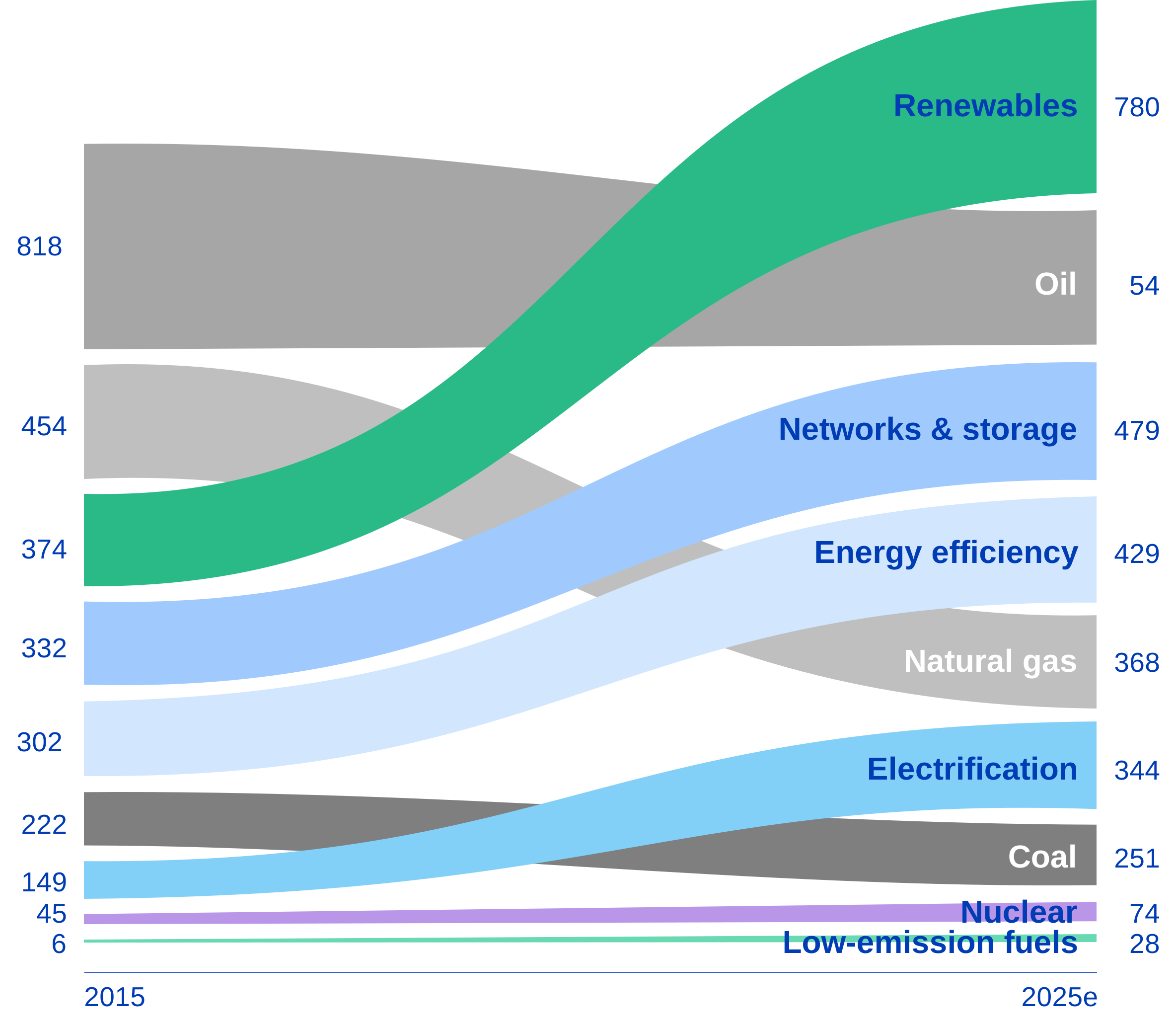
Growth is clearly concentrated in climate-friendly technologies, driven by the energy transition. The following shifts are particularly noteworthy:
- Renewable Energy: According to IEA data, this sector has experienced the most significant investment growth over the past decade, with volumes increasing from USD 374 billion to USD 780 billion. This is also reflected in their growing share of global electricity production – IEA estimates suggest that renewables could account for 35% of global electricity generation by 2025. The year 2025 may also go down in history as the first year when more electricity was generated from renewable sources than from coal.
- Grids and Storage: The energy transition has driven record investments in battery storage and power grids, particularly in industrialized countries, to keep pace with changes in the electricity sector and electrification (see below). In its latest energy investment report, the IEA estimates these expenditures for 2025 at around USD 240 billion. According to the agency, this amount would need to double by 2050 to stay on the current decarbonization path. The energy storage sector is also developing rapidly. Battery costs have dropped by two-thirds over the past decade, while global spending on battery storage is approaching the level of investments in gas power plants, according to the IEA.
- Energy Efficiency: As calculated by the IEA, new onshore wind and photovoltaic installations are, in most cases, a more cost-effective option for electricity generation than fossil fuels. Artificial intelligence (AI), sometimes criticized for being energy-intensive, could also contribute significantly to more efficient energy use and thus to reducing greenhouse gas emissions. As we have previously analyzed, the net effect of AI on CO2 emissions is likely to be positive in the medium term.
- Electrification: By 2050, global electricity demand could double or even triple, corresponding to an annual growth rate of 3% to 4.5% – likely outpacing expected global economic growth. From a sustainable investment perspective, this is interesting for several reasons. Firstly, electrification can promote decarbonization, thanks to electricity generated from renewable energy and higher energy efficiency. Additionally, electrification promises to reduce dependence on fossil fuels, thereby enhancing energy security.
The already observed shift in investment flows suggests that the energy transition offers exciting potential from an investment perspective. Companies that contribute to this transformation with their products and services could, in our view, experience above-average growth.
Energy Transition: Keeping a Close Eye on Returns on Capital
For investors, however, it is crucial not to lose sight of quality: in our view, companies must grow profitably and earn their cost of capital to create value for investors. We have already outlined how this can be achieved. Therefore, investors focusing on energy transition should prioritize returns on capital (see video above).
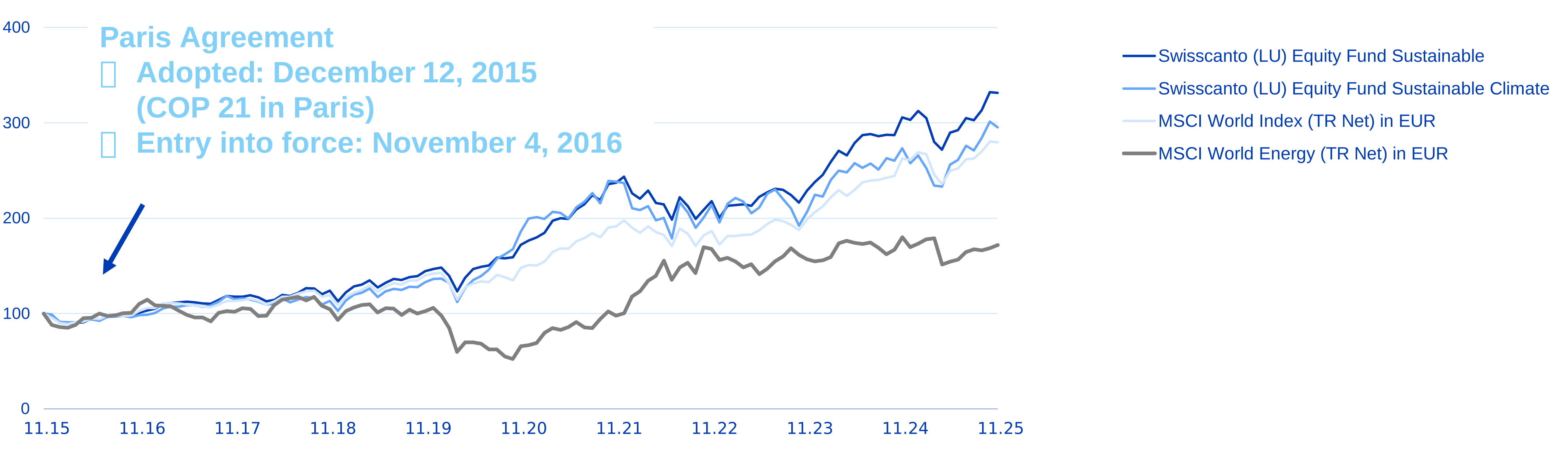
Our sustainable equity strategy, launched in 2007 and focused on the investment theme of decarbonization and climate protection, has demonstrated over the past ten years that the energy transition can outperform both the MSCI World global equity index and the traditional energy sector – provided that returns on capital remain a primary focus (see chart below). We are confident that such a strategy has the potential to outperform the market over the next decade as well.
Focus on energy transition delivered above-average Returns over the past decade (Performance in % as of 30.11.2025, gross in EUR)
Investment theme «Climate»: Insights
Legal disclaimer Switzerland
Legal disclaimer Switzerland
This document only serves advertising and information purposes, is for distribution in Switzerland only and is not directed at persons in whose nationality or place of residence prohibit access to such information under applicable law. Where not indicated otherwise, the information concerns the collective investment schemes under the law of Luxembourg managed by Swisscanto Asset Management International S.A. (hereinafter "Swisscanto Funds"). The products described are undertakings for collective investment in transferable securities (UCITS) within the meaning of EU Directive 2009/65/EC, which is governed by Luxembourg law and subject to the supervision of the Luxembourg supervisory authority (CSSF). This document does not constitute a solicitation or invitation to subscribe or make an offer to purchase any securities, nor does it form the basis of any contract or obligation of any kind. The sole binding basis for the acquisition of Swisscanto Funds are the respective legal documents (management regulations, sales prospectuses and key information documents (PRIIP KID), as well as financial reports), which can be obtained free of charge at https://products.swisscanto.com as well as at Swisscanto Fondsleitung AG, Bahnhofstrasse 9, CH-8001 Zurich (also acting as representative of the Luxembourg Swisscanto funds in Switzerland) or in all offices of Zürcher Kantonalbank. Paying Agent for the Luxembourg Swisscanto funds in Switzerland is Zürcher Kantonalbank, Bahnhofstrasse 9, CH-8001 Zurich. Information about the sustainability-relevant aspects in accordance with the Regulation (EU) 2019/2088 as well as Swisscanto's strategy for the promotion of sustainability and the pursuit of sustainability goals in the fund investment process are available on the same website. The sub-fund referred to in the document is subject to Article 9 of Regulation (EU) 2019/2088. The distribution of the fund may be suspended at any time. Investors will be informed about the deregistration in due time. The investment involves risks, in particular those of fluctuations in value and earnings. Investments in foreign currencies are subject to exchange rate fluctuations. Past performance is neither an indicator nor a guarantee of future success. The risks are described in the sales prospectus and in the PRIIP KID. The information contained in this document has been compiled with the greatest care. Despite professional procedures, the correctness, completeness and topicality of the information cannot be guaranteed. Any liability for investments based on this document will be rejected. The document does not release the recipient from his or her own judgment. In particular, the recipient is recommended to check the information for compatibility with his or her personal circumstances as well as for legal, tax and other consequences, if necessary, with the help of an advisor. The prospectus and PRIIP KID should be read before making any final investment decision. The products and services described in this document are not available to U.S. persons under the relevant regulations (in particular Regulation S under the U.S. Securities Act of 1933).
Data as at (where not stated otherwise): 11.2024
© Zürcher Kantonalbank. All rights reserved.
Legal disclaimer international
Legal disclaimer international
This document only serves advertising and information purposes and is not directed at persons in whose nationality or place of residence prohibit access to such information under applicable law. Where not indicated otherwise, the information concerns the collective investment schemes under the law of Luxembourg managed by Swisscanto Asset Management International S.A. (hereinafter "Swisscanto Funds"). The products described are undertakings for collective investment in transferable securities (UCITS) within the meaning of EU Directive 2009/65/EC, which is governed by Luxembourg law and subject to the supervision of the Luxembourg supervisory authority (CSSF).
This document does not constitute a solicitation or invitation to subscribe or make an offer to purchase any securities, nor does it form the basis of any contract or obligation of any kind. The sole binding basis for the acquisition of Swisscanto Funds are the respective published legal documents (management regulations, sales prospectuses and key information documents (PRIIP KID), as well as financial reports), which can be obtained free of charge at https://products.swisscanto.com/. Information about the sustainability-relevant aspects in accordance with the Regulation (EU) 2019/2088 as well as Swisscanto's strategy for the promotion of sustainability and the pursuit of sustainability goals in the fund investment process are available on the same website. The sub-fund referred to in the document is subject to Article 9 of Regulation (EU) 2019/2088.
The distribution of the fund may be suspended at any time. Investors will be informed about the deregistration in due time. The investment involves risks, in particular those of fluctuations in value and earnings. Investments in foreign currencies are subject to exchange rate fluctuations. Past performance is neither an indicator nor a guarantee of future success. The risks are described in the sales prospectus and in the PRIIP KID. The information contained in this document has been compiled with the greatest care. Despite professional procedures, the correctness, completeness and topicality of the information cannot be guaranteed. Any liability for investments based on this document will be rejected. The document does not release the recipient from his or her own judgment. In particular, the recipient is recommended to check the information for compatibility with his or her personal circumstances as well as for legal, tax and other consequences, if necessary, with the help of an advisor. The prospectus and PRIIP KID should be read before making any final investment decision.
An overview of investors' rights is available at https://www.swisscanto.com/int/en/legal/summary-of-investor-rights.html.
The products and services described in this document are not available to U.S. persons under the relevant regulations (in particular Regulation S under the U.S. Securities Act of 1933). Data as at (where not stated otherwise): 11.2024
© Zürcher Kantonalbank. All rights reserved.